What Deserves to Be Looked At
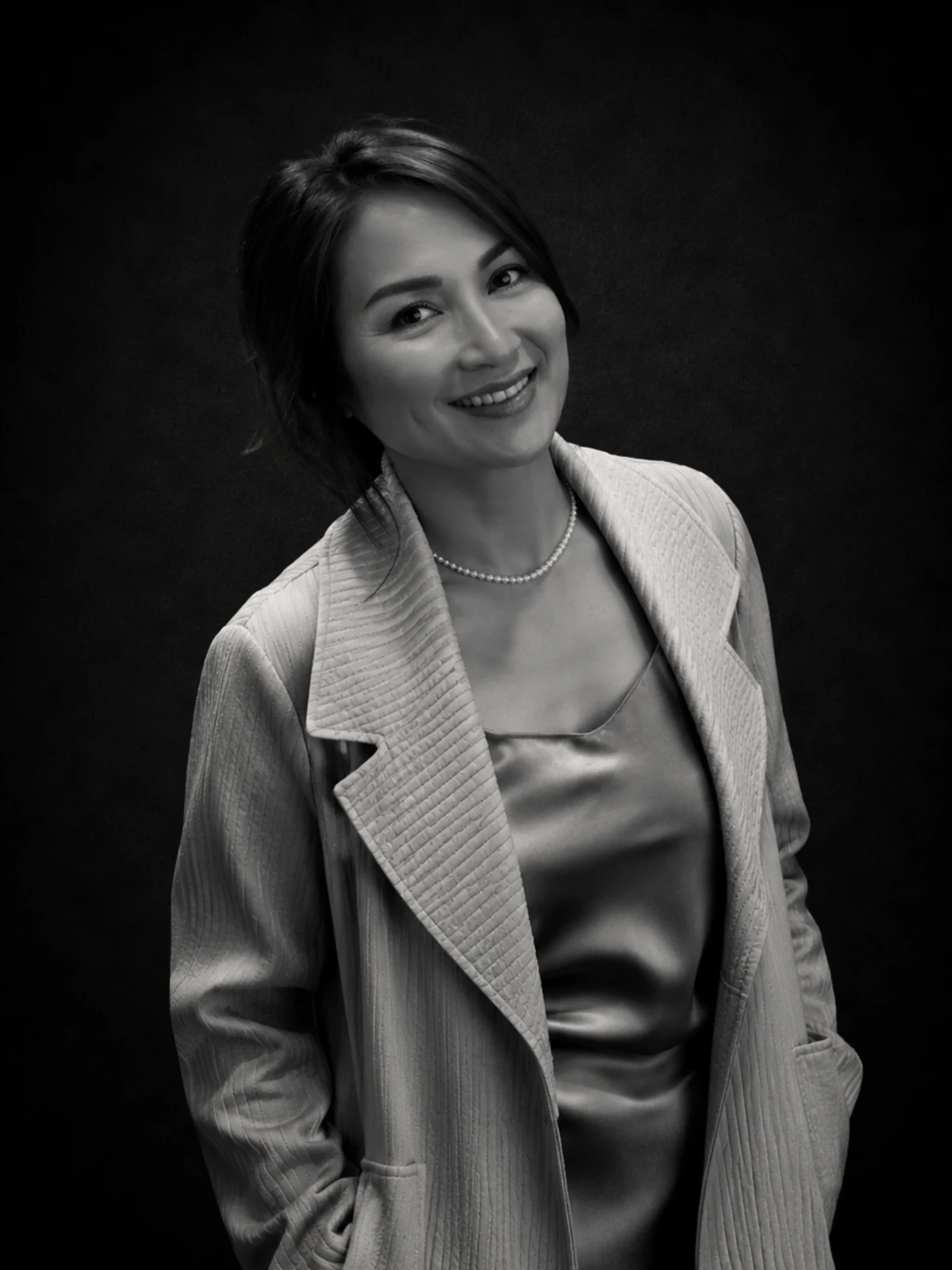
Jie Xia graduated from the China Academy of Art and worked on large architectural projects in Shanghai before turning to painting — carrying with her an eye trained to think in volume, light, and presence long before decoration.
Her series Shou (守 — to protect, to guard, never to give up) presents hyper-realistic images of animals in rope or halter, holding deliberately open the ambiguity between protection and restraint. The rendering is exact: each strand of hair, each fold of skin, built by a hand in full command of what it is doing. Nothing is stylized, nothing is softened.
The animals are not symbols or allegories. They are presences — painted with a light that sculpts and a level of detail that refuses to let the viewer look away quickly. Her subject is the moment the modern world has forgotten: when we still stopped, still listened, still held a relationship with the natural world that went beyond use.
Hyper-realism is easily mistaken for a display of skill. In Jie Xia's hands it is an argument. The precision is not there to impress — it is there because attention is the subject. To render an animal this closely is to insist that it deserves that much looking.
Shou holds a tension it never resolves. The rope may be protection or it may be restraint, and Xia refuses to tell us which. What she does tell us is that the animal's fate does not determine its worth. It may be leaving. It may already know. And still the moment deserves respect — this is the position from which the entire series is painted.
What W/ Soul recognizes in Xia is a painter who has made care into a technique. Our grandparents named their animals, not because they did not know what was coming, but because respect knows no conditions. Her work reconstructs that ethic without nostalgia: every living thing is worth seeing closely, regardless of what waits for it.
The first time I saw Jie's work, I thought I was looking at a photograph. Not the memory of one — the thing itself. Each hair, each fibre of the rope, rendered by a hand so steady it seemed impossible that a brush had been involved at all. That kind of control pulls you toward the artist. You want to know who does this.
Then I spoke with her, and the work grew larger. What I had read as technical mastery turned out to be something else underneath: care, and respect for things — an ethic that happens to express itself through precision. The skill is not the point. The skill is what the care looks like when it reaches the canvas. That combination is why, for me, her work stands alone.
— The Curator