The Game in the Frame
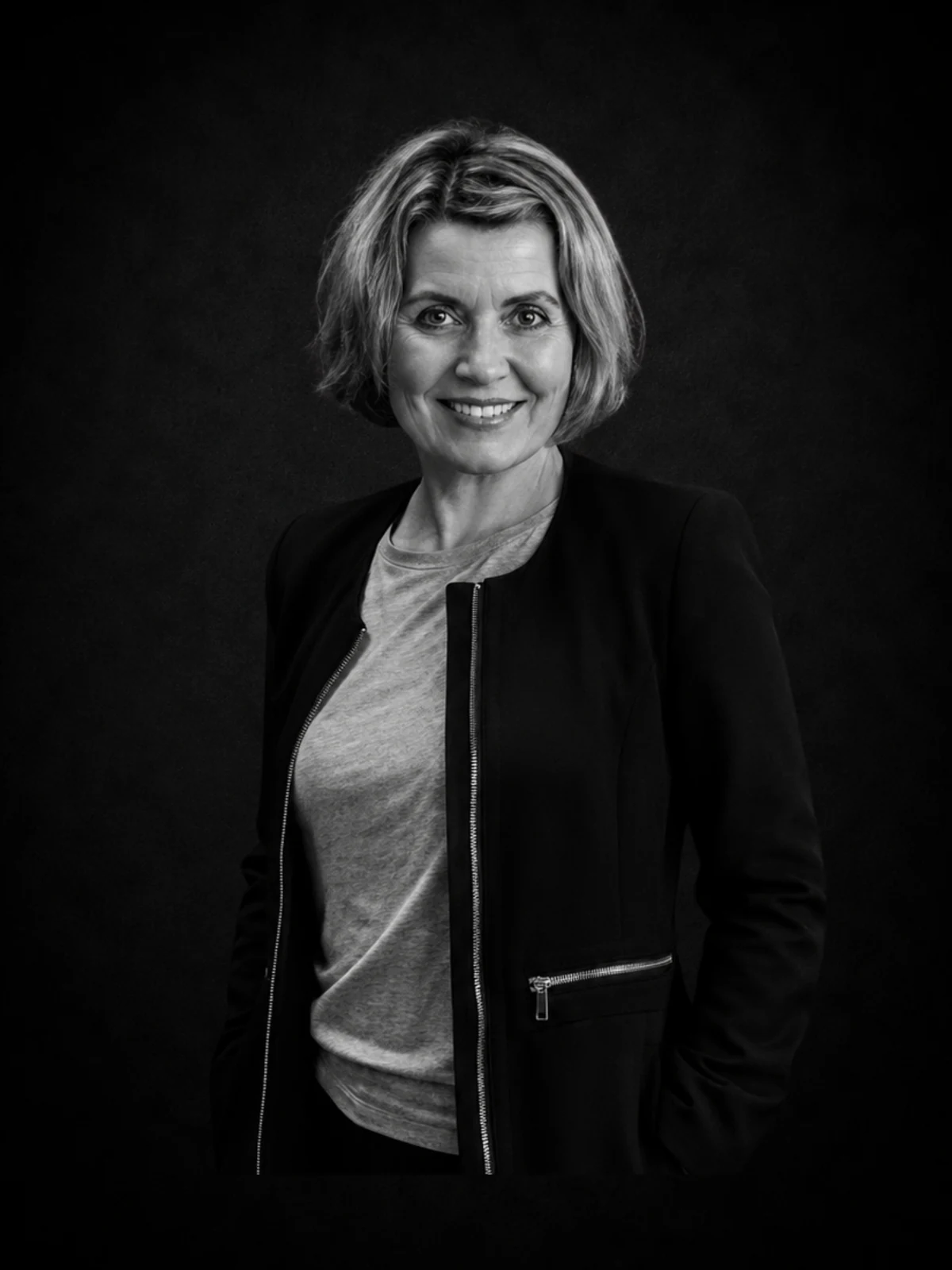
Catrin Wifling is a self-taught German painter with a deep interest in art history, architecture, and design. She teaches at a secondary school and paints in the margins of her free time. A seasoned traveler and dedicated tennis player, she brings a lived understanding of movement directly into her work.
Her painting brings Fauvism and Cubism into contact, treating motion as its central subject rather than its decoration. Athletic rhythm becomes sharp geometry; the body in play becomes structure. Bold forms and vivid palettes carry both the tension of the moment before a strike and the release that follows it.
Each canvas holds a balance between instinct and construction — the split-second read of a player and the deliberate order of a composition. In her hands, sport becomes metaphor and movement becomes emotion: not the depiction of a game, but the feeling of being inside one.
Wifling paints from a place most artists don't have access to — the body of someone who competes. The movement in her work is not observed from the outside; it is remembered from within, the way a player remembers the arc of a shot rather than its photograph.
That interior knowledge is what separates her geometry from mere abstraction. When she fractures a form into planes and vivid color, she is not decomposing an image — she is reconstructing a sensation: balance, timing, the tension of a moment held just before it breaks. The visual languages of Cubism and Fauvism give her the tools, but the subject is entirely her own.
What W/ Soul values in Wifling is precisely this fusion of instinct and structure. She works in the margins of a full life, and the work carries that condition honestly — painting made not from theory, but from motion lived and then translated into form.
I like Wifling's work for a reason I can defend and one I can't. The one I can: she makes movement legible without freezing it — the canvas keeps vibrating even when you stand still in front of it. The one I can't quite explain: her paintings make me feel the movement before I understand it, the way you flinch at a ball before you've decided to.
There's an honesty in how she paints — in the margins of a teaching life, without the machinery of a full-time career, and none of that shows as limitation. It shows as freedom. She paints because she wants to, and the work is lighter and truer for it. That is rarer than it sounds.
— The Curator