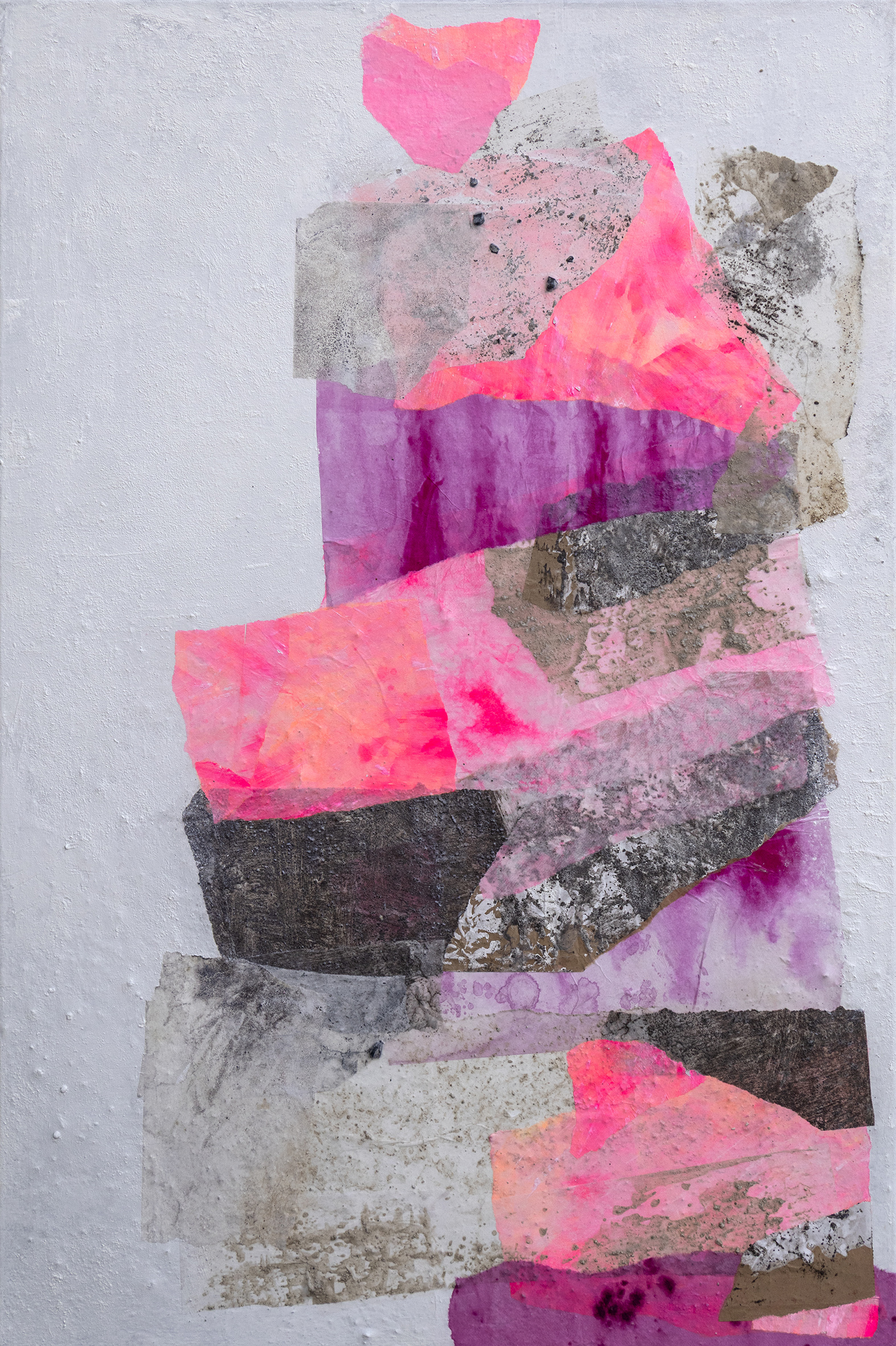
Hoffnungsschichten
Price on request
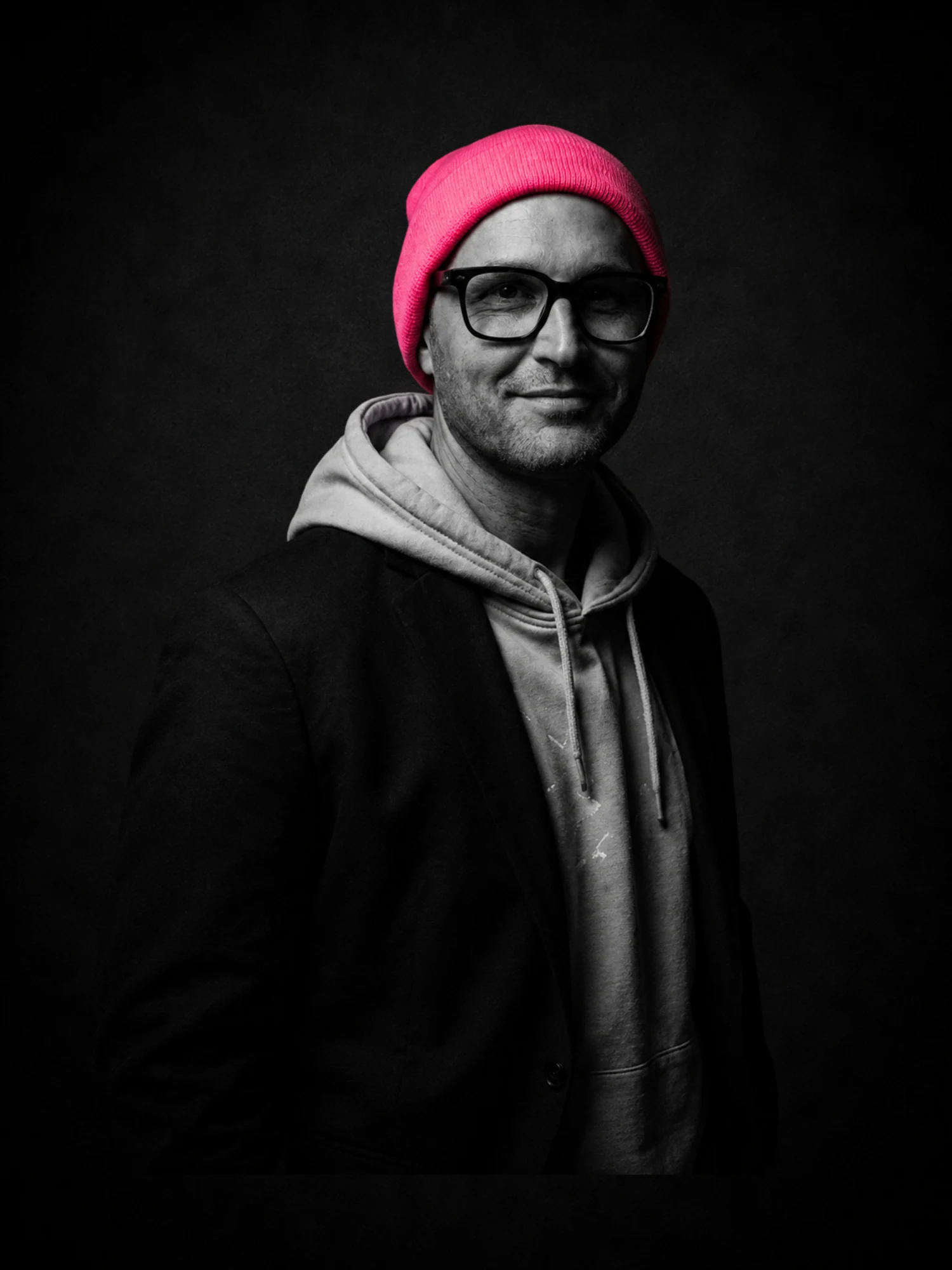
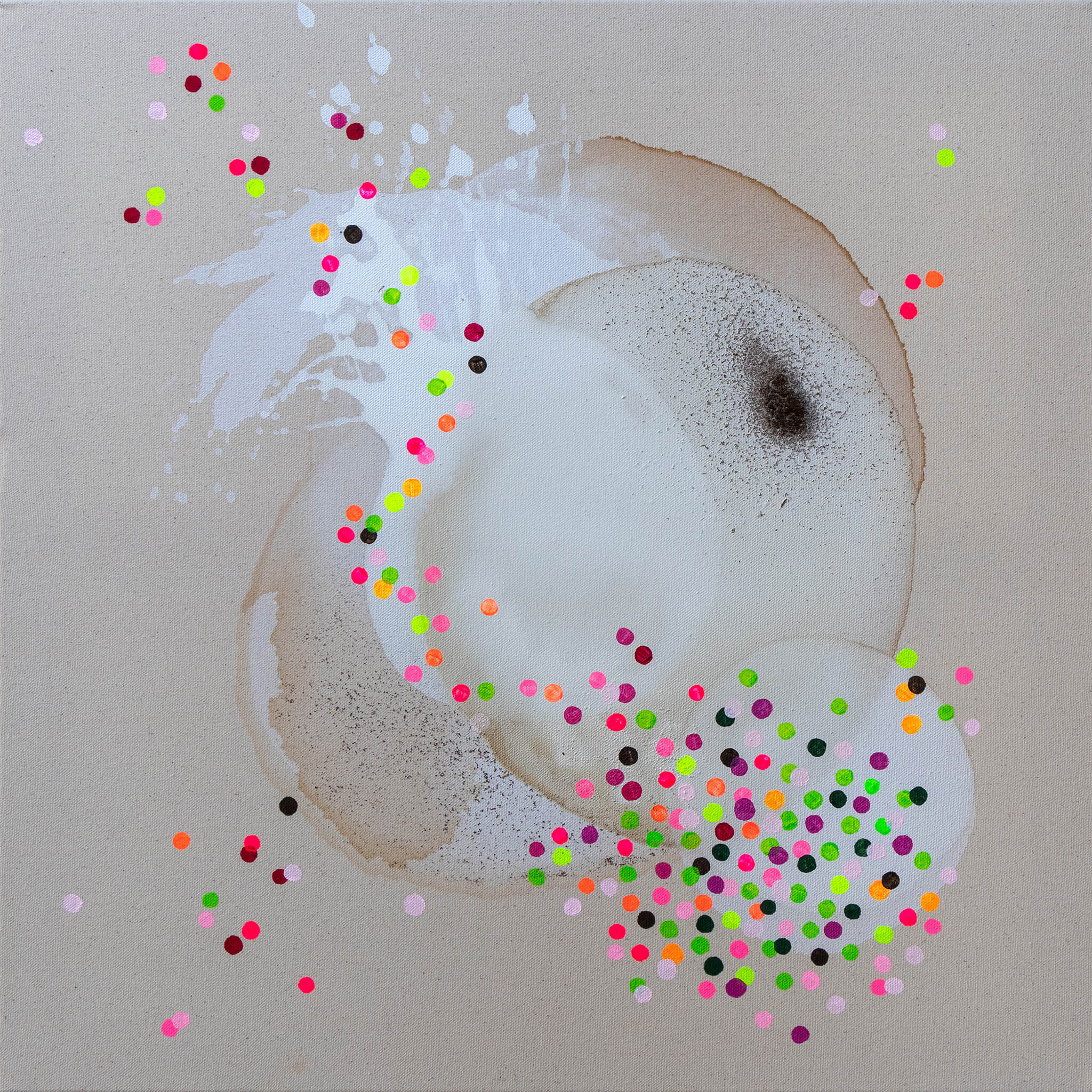
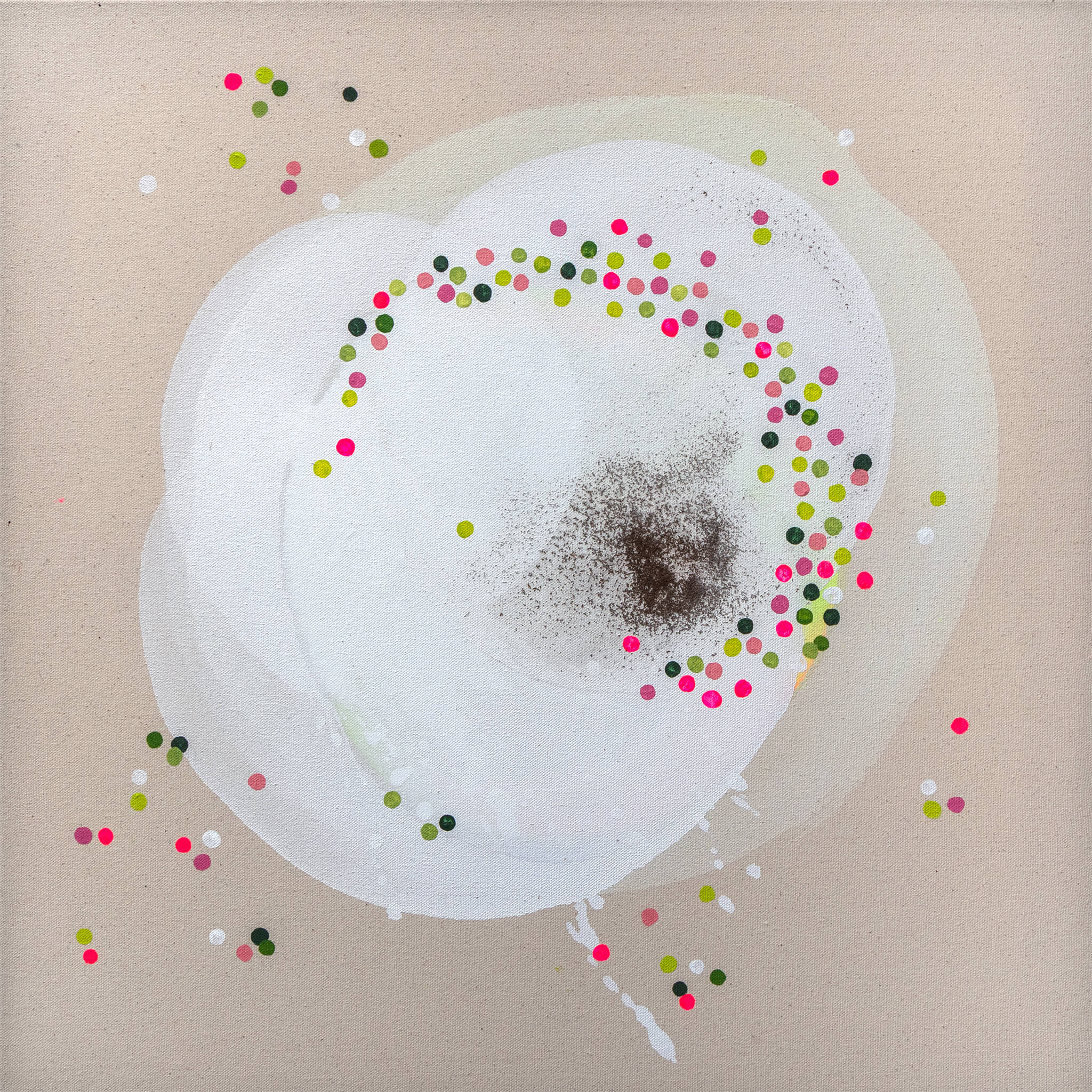
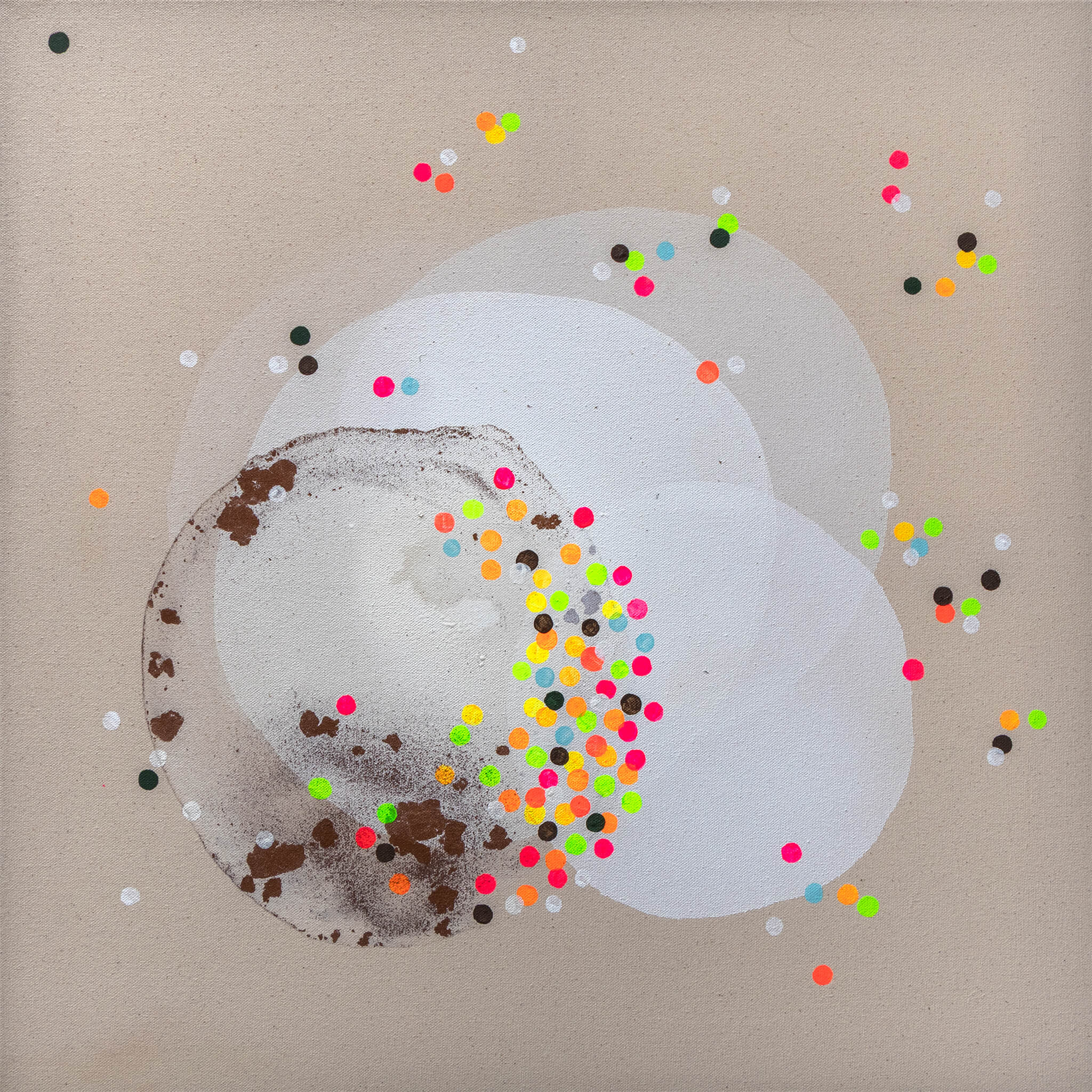
Carsten Heine was born and raised in the former East Germany and trained as a media designer. He began his professional career as a graphic designer in Munich, where he continues to live and work as a creative director. Painting entered his life early, but he returned to it with full intensity in 2022, after the death of his mother the year before — a turning point that led him to exhibit publicly for the first time.
His current practice moves primarily between two distinct bodies of work. In Out of the Bubble, Heine works with acrylic, soft pastel and, at times, coffee on raw, untreated canvas. The natural weave remains visible and active. Water moves through the pigments and displaces them beyond complete control, so that the final surface emerges from a negotiation between decision and chance.
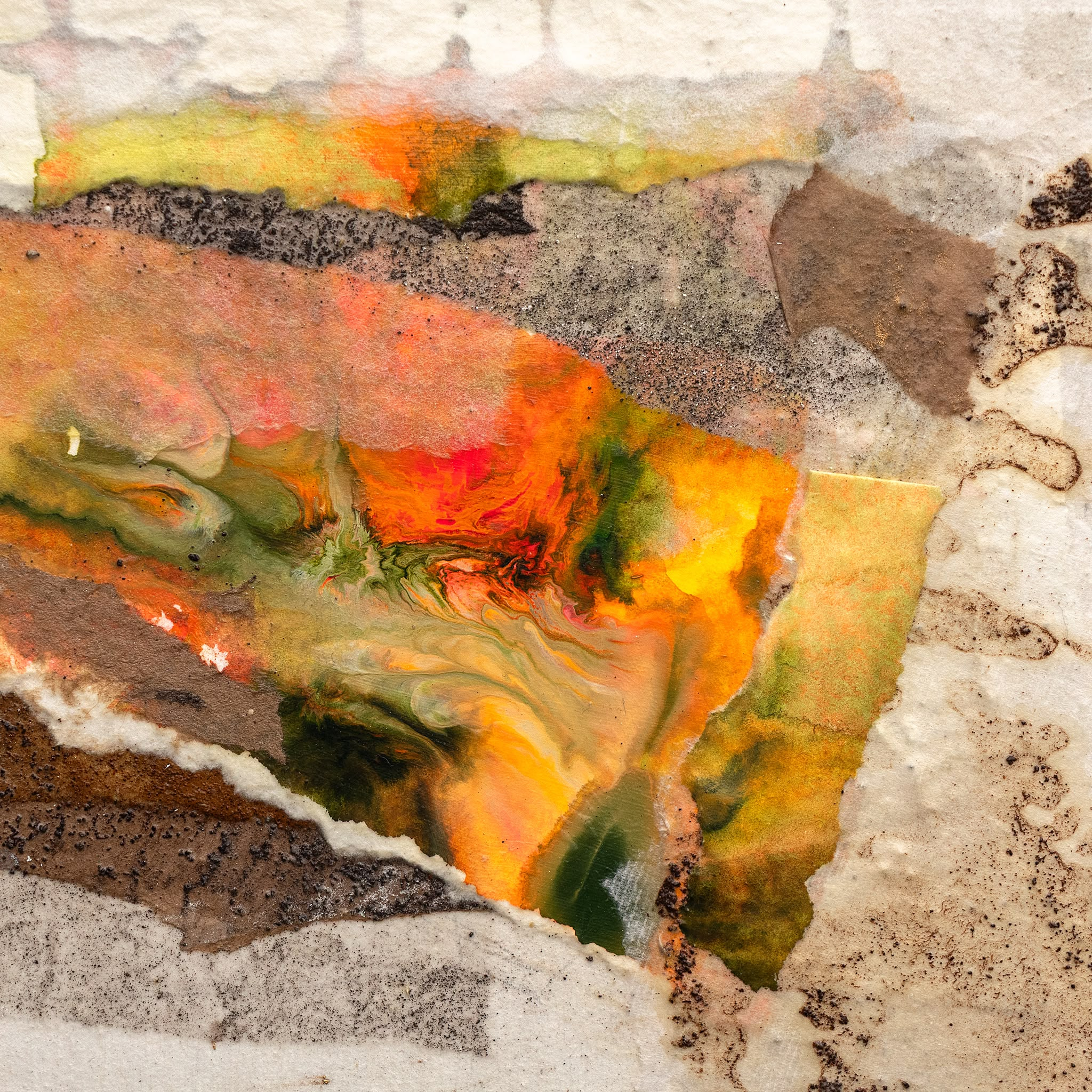
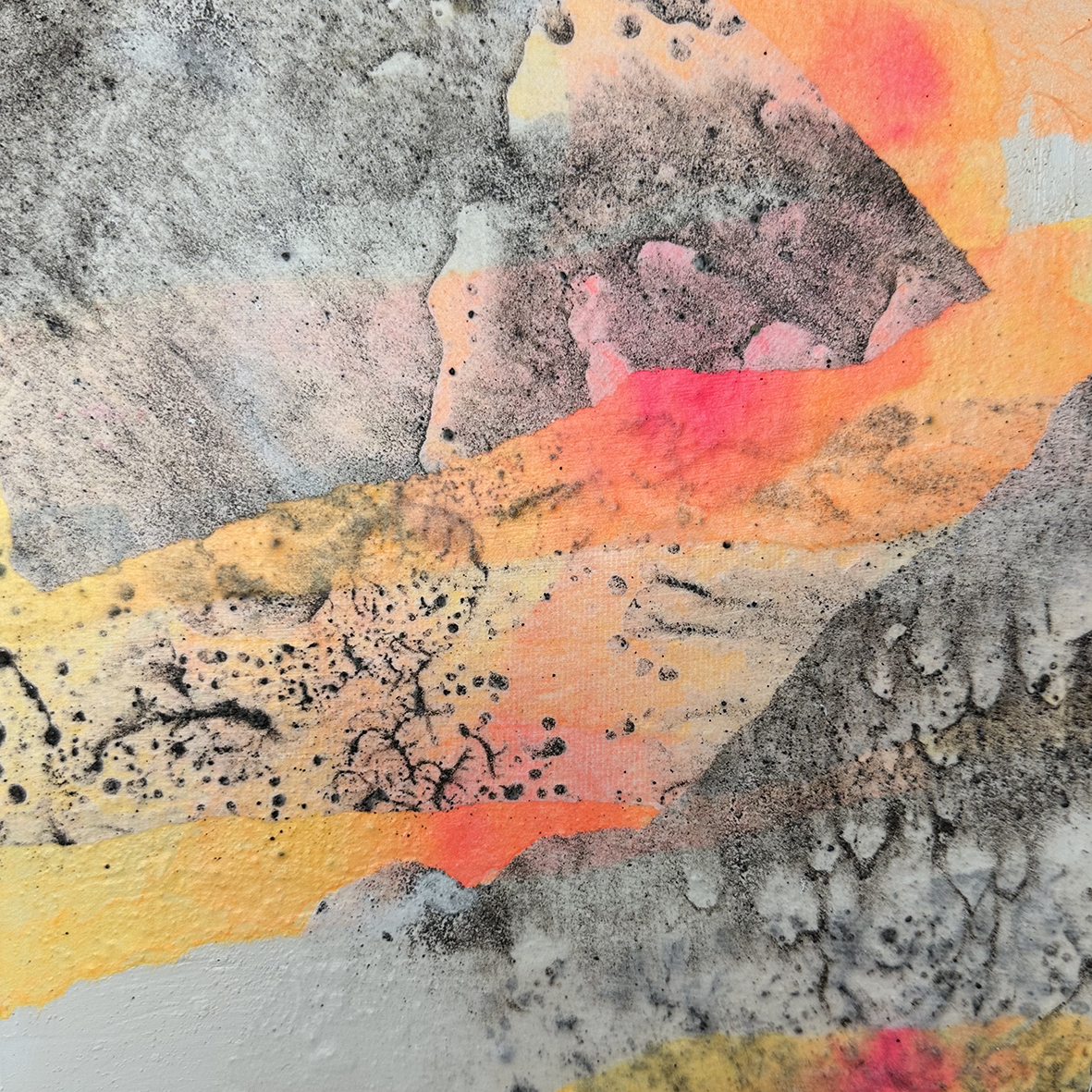
Ecken und Kanten follows a different logic. Here the image is built rather than absorbed: Chinese paper, different papers and mixed materials are layered, torn, joined and tested against one another, sometimes on canvas, sometimes on wood. Lava, rust, lime, ash and clay can enter the composition as physical matter, not simply as effects. Experiment is central — each material is allowed to retain its own resistance, texture and history.
Across both series, NEON acts as a recurring current. It is not a separate technique or motif, but a chromatic energy that repeatedly enters the work and links otherwise different processes. The vivid intervention of neon color gives the surfaces a contemporary tension — a visual signal cutting through earth, fiber, ash, water and pigment.
Heine resists the idea of a single fixed style. What connects the work is instead a way of proceeding: structure is established, material is introduced, and then enough control is released for something unforeseen to happen. The work begins with intention. It becomes itself through encounter.
Heine's two principal series begin from opposite conditions.
In Out of the Bubble, the surface receives. Raw canvas offers no protective distance between material and support: pigment enters the weave, water shifts what has been placed, and correction becomes limited. The painter determines the conditions, but the work is completed by forces he does not fully command. Uncertainty is not an accident in this process; it is one of its materials.
In Ecken und Kanten, the surface is constructed. Paper, wood, lava, rust, lime, ash, clay and other elements meet through accumulation and friction. Here experimentation is less about surrender to water than about discovering what happens when substances with different densities, textures and associations are made to coexist. The collage becomes a field of decisions — physical, provisional and deliberately open.
What binds these approaches is not medium but attitude. Heine does not use material merely to execute an image already resolved in his mind. He places materials into situations where they can answer back. That negotiation between control and resistance gives the work its particular tension.
NEON runs through this practice as a visual constant: sharp, artificial, immediate. Against raw linen, mineral matter and weathered surfaces, it produces a productive contradiction — something synthetic inside something elemental. W/ Soul recognizes in Heine precisely this capacity to hold opposing conditions together without forcing them into resolution: construction and chance, natural matter and artificial color, precision and experiment.
I first understood Carsten's work through the raw canvas. I was drawn to the fact that he allowed the surface to remain visible — that he did not try to hide what the painting was made on. But the more I looked, the more I realized that this was only one part of what interested me.
The collages changed the way I read him. There, the openness I had seen in water becomes something more physical: paper beside rust, ash beside pigment, something fragile beside something mineral. The work is still about letting go of complete control, but now the conversation happens between materials rather than only between hand and water.
And then there is the neon. It appears almost like Carsten himself does — with a little insistence, a little humor, refusing to disappear quietly into the background. I like that. It prevents the work from becoming nostalgic or overly solemn. However earthy or weathered the material becomes, there is always this flash of the present.
What I value most is that he keeps experimenting. He has not found one successful formula and repeated it. He keeps putting the work at risk, and I think that is why it still feels alive to me.
— The Curator